
Ocean - Djavan
Tuesday poetic musings #32

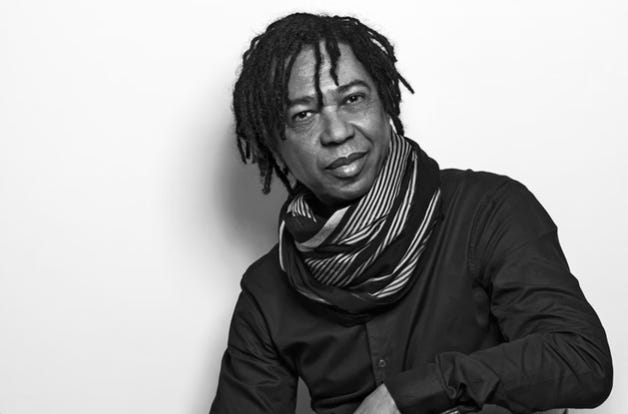
Earlier this month, I shared a profile on one of my favorite musicians, the Brazilian singer-songwriter, guitarist and producer Djavan Caetano Viana (1949 —).
In that post, I mentioned his song Oceano (Ocean) as an example of his poetic writing.
Djavan frequently plays with grammar, homophones and polysemous words, dives deep into figures of speech, juxtaposes similar sounding words, dances with chords and rhythms (in this case, the melody goes back and forth like the tide and “crashes” in the end like a wave).
Still talking about sound effects, he takes full advantage of nasality when singing, which makes Ocean even more Brazilian.1
I tried to capture the multitude of meanings the lyrics evoke, but I’m not a professional translator, so feel free to make corrections or suggestions.2
Without further ado, here is Djavan’s Ocean:
As soon as the day dawned
There on the high seas of passion
You could see the weather crumbling/You could see time crumbling
Where are you? How lonely
Forgot about meIn short, of everything that exists on earth
There is nothing anywhere
That may grow without you arriving
Far from you everything stopped
No one knows what I’ve sufferedLove is a desert and its fears / The tide, a wasteland and its fears
Life that rides on the saddle of these pains/ Life that goes on in the cell of these pains
Doesn’t know (how) to return, give me your warmth/ Doesn’t know (how) to return, (doesn’t know) to give me your warmthCome make me happy because I love you
You flow into me, and I, ocean (as a noun, he is the ocean; consequently she is a river)/ You flow into me and I ocean (as a verb, absorbing whatever she throws at him)
And I forget loving is almost a pain/ And I forget loving is almost an ardor
I only know (how) to live if it's for you
It’s crazy to me that song almost didn’t see the light of day.
Djavan had abandoned his first draft. It was only five years later, when his daughter found a recording of the song in its initial stages and urged him to finish it, that this classic finally came to be.
Here is a live performance of Ocean:
Portuguese has oral and nasal vowels, diphthongs, and triphthongs, and the Brazilian variation of the language tends to emphasize nasalized sounds in comparison to European Portuguese. It’s one of the many reasons foreigners say we speak as if we were singing.
Where there is a bar “/” breaking a line, the text on the left side corresponds to the actual lyrics, followed by alternative translation (derived from homophones, polysemy and pronunciation) on the right side. Text between parentheses clarifies meaning.